




You know those cozy Italian restaurants with flickering candlelight, checkered tablecloths, and a smell so good it makes you stop in your tracks? This dish; Fettuccine with Brown Butter and Sage; is the essence of that magic, and it’s easier to make at home than you could ever imagine. It was a plate of pasta just like this that made me fall in love with simple cooking on a chilly autumn evening years ago. There’s no heavy cream, no complicated sauce; just a handful of humble ingredients transformed into pure, sophisticated comfort.
This recipe is your secret weapon for an impressively elegant dinner that’s ready in 15 minutes flat. It’s the perfect answer to “What’s for dinner?” when you want something special but have no time. It’s also the dish I make when I need a quiet moment of culinary therapy; watching butter turn a deep, nutty amber and hearing fresh sage leaves sizzle is good for the soul.
The flavor profile is pure magic. The brown butter is the star, offering a rich, toasty, and deeply nutty foundation. The fried sage leaves become delicate, crispy chips that impart an earthy, slightly peppery aroma. Wrapped around silky egg fettuccine and finished with sharp, salty Parmigiano cheese, every bite is a perfect balance of rich, savory, and aromatic flavors with a beautiful mix of textures: tender pasta, crispy sage, and a luxuriously velvety sauce that clings to every strand.
Why This Recipe Is a Weeknight Game Changer
This isn’t your average pasta aglio e olio. Browning the butter is a simple technique that unlocks a world of flavor, elevating basic pantry staples into a restaurant worthy meal. It’s proof that you don’t need a long ingredient list to create something truly memorable. The process is fast, forgiving, and deeply satisfying.
Expert Tips & Tricks for Perfect Brown Butter Sage Pasta
Success Tips: The Secrets to Never Failing
- The Butter Watch: Use a light colored skillet (like stainless steel) so you can clearly see the butter change color. It will go from melted, to foamy, to golden, to a beautiful nutty brown. The moment you see brown specks (the toasted milk solids) form at the bottom and smell a delicious nutty aroma, it’s done. This happens fast; don’t walk away!
- Pasta Water is Liquid Gold: Always, always reserve a cup of the starchy pasta water before draining. This water is the key to creating a silky, emulsified sauce that clings to the pasta instead of pooling at the bottom of the bowl. Add it a tablespoon at a time until the sauce reaches the perfect consistency.
- Fry Sage to Perfection: Add the sage leaves to the butter once the foam subsides. They should sizzle gently. Fry for just 30-60 seconds until crisp but still vibrant green, then remove immediately. If they turn dark brown or black, they will taste bitter.
Make Ahead & Storage
- Make Ahead: You can fry the sage leaves and make the brown butter sauce up to 2 hours ahead. Keep them separate at room temperature. Reheat the brown butter gently before tossing with the freshly cooked pasta.
- Storage: This dish is best enjoyed immediately. If you have leftovers, store them in an airtight container in the refrigerator for up to 2 days. The pasta will absorb the sauce.
- Reheating: Reheat leftovers gently in a skillet over low heat with a splash of water, broth, or a little extra butter to loosen the sauce. Microwave reheating will make the pasta gummy and the sage soggy.
Freezing Instructions
Unfortunately, this pasta does not freeze well. The delicate texture of the pasta and the fried sage will be compromised upon thawing and reheating. This is a “cook and enjoy” recipe.
Step by Step Instructions
1Cook the Pasta & Prep Your Mise en Place
Bring a large pot of generously salted water to a rolling boil (it should taste like the sea). Add the 8.8 oz of dried egg fettuccine and cook according to package directions until al dente. Before draining, carefully scoop out 1/2 cup of the starchy pasta water and set it aside. Drain the pasta. While the pasta cooks, grate your Parmigiano cheese and stem your 20 fresh sage leaves.
2Create the Nutty Brown Butter & Crispy Sage
In a large, heavy bottomed skillet or Dutch oven (a light colored one is best), melt 4 1/2 tablespoons of unsalted butter over medium heat. Let it cook, swirling the pan occasionally. It will melt, then foam. Once the foam subsides, watch closely. The butter will turn from yellow to a fragrant, nutty amber color with little brown specks at the bottom. This is brown butter! Immediately add the sage leaves. They will sizzle. Cook for about 30-60 seconds, just until crisp, then use a slotted spoon to transfer them to a paper towel lined plate.
3Build the Simple, Luxurious Sauce
To the beautiful brown butter in the skillet, add 4 1/2 tablespoons of thawed veal stock (or the beef/chicken broth substitute). Stir to combine; it will sizzle and bubble wonderfully. If using the broth substitute, let it simmer for a minute to reduce slightly and concentrate the flavor.
4The Grand Toss & Emulsify
Add the drained, hot fettuccine directly to the skillet with the brown butter sauce. Off the heat, add 5 tablespoons of the grated Parmigiano cheese. Using tongs, toss vigorously to coat every strand of pasta in the sauce, allowing the cheese to melt and create a creamy emulsion. If the pasta looks dry, add the reserved pasta water, one tablespoon at a time, until the sauce is glossy and clings perfectly to the pasta.
5Season, Garnish, and Serve Immediately
Taste the pasta and season with freshly ground black pepper and a pinch of salt (remember, the cheese and pasta water are already salty). Divide among warm bowls. Garnish generously with the crispy fried sage leaves and serve immediately, passing extra grated Parmigiano cheese at the table.
Ingredient Substitutions & Dietary Swaps
Dietary Swaps
- Vegan: Use a high quality vegan butter (one with a high fat content that browns well, like Miyoko’s or Melt) and nutritional yeast or a vegan Parmesan alternative in place of the cheese. Omit the veal stock or use a rich vegetable broth.
- Gluten Free: Substitute the egg fettuccine with your favorite gluten free pasta. Brown rice or quinoa pasta works well. Be sure to reserve the starchy pasta water as instructed.
- Dairy Free: Follow the vegan substitutions for butter and cheese.
Common Ingredient Substitutes
- Fresh Sage: If you can’t find fresh, you can use 2 teaspoons of rubbed dried sage added directly to the brown butter (you won’t get the crispy leaf garnish, but the flavor will be there).
- Veal Stock: As noted in the recipe, a combination of 2 tbsp beef broth + 2.5 tbsp chicken broth is an excellent substitute. For a lighter flavor, use all chicken broth.
- Parmigiano Reggiano: Pecorino Romano is a sharper, saltier alternative. A good quality domestic Parmesan can also be used.
- Pasta Shape: While fettuccine is classic, tagliatelle, pappardelle, or even a short, sturdy shape like rigatoni will work beautifully.
Serving Suggestions
Side Dish Pairings
This rich pasta is perfect on its own as a luxurious main course. To make it a fuller meal, pair it with a simple, bright side to cut through the richness. A classic Arugula Salad with Lemon Vinaigrette or Roasted Asparagus are perfect companions. For a true trattoria experience, serve with a side of garlic bread to soak up every last drop of the brown butter sauce.
Wine/Drink Pairing
The nutty, savory notes of this pasta pair wonderfully with a medium bodied white wine like a Soave Classico or an unoaked Chardonnay. If you prefer red, opt for a lighter, low tannin option like a Pinot Noir or Valpolicella Classico. For a non alcoholic option, sparkling water with a twist of lemon or a ginger based mocktail would be lovely.
Frequently Asked Questions (FAQ)
My butter burned! What do I do?
If your butter turns black and smells acrid, it’s burned. Unfortunately, there’s no saving it; it will make your entire dish taste bitter. Toss it, wipe out the pan, and start over with fresh butter, using lower heat.
Can I use dried sage instead of fresh?
You can use about 2 teaspoons of rubbed dried sage for flavor, but add it to the butter just as it starts to brown. You will miss the textural element and beautiful garnish of the crispy leaves, but the essential flavor will be there.
What does “brown butter” actually taste like?
Brown butter (beurre noisette) has a transformative, deep, nutty, and toasty flavor that is entirely different from melted butter. It loses its sweetness and gains a complex, almost hazelnut like aroma that forms the soul of this dish.
How long does this last in the fridge?
Leftovers will keep in an airtight container for 1-2 days. Reheat gently in a skillet with a splash of water to revive the sauce. The sage leaves will lose their crispness.
Equipment List
- Large Pot (6-8 quarts): For cooking the pasta in plenty of well salted water.
- Large, Light Colored Skillet or Dutch Oven (12 inch): Essential for browning the butter where you can see the color change. A Stainless Steel Skillet is ideal for this.
- Tongs: For easily tossing the pasta with the sauce.
- Box Grater or Microplane: For freshly grating the Parmigiano cheese, which melts far better than pre grated.
- Liquid Measuring Cup or Small Bowl: For reserving the crucial pasta cooking water.
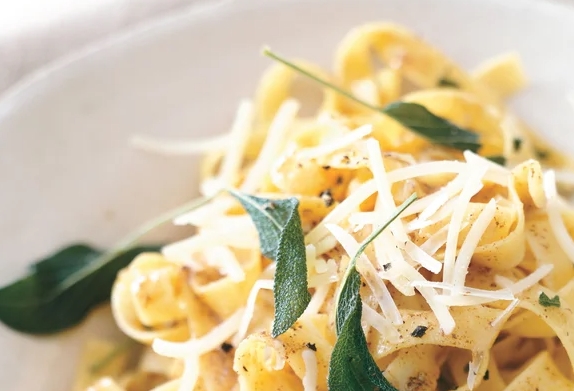
Fettuccine with Brown Butter and Sage
Ingredients
- 8.8 ounces 250g dried egg fettuccine pasta
- 4 1/2 tablespoons unsalted butter
- 20 fresh sage leaves stems removed
- 4 1/2 tablespoons veal stock thawed (or substitute: 2 tbsp beef broth + 2.5 tbsp chicken broth)
- 5 tablespoons freshly grated Parmigiano Reggiano cheese plus more for serving
- Kosher salt and freshly ground black pepper
Instructions
- Cook the Pasta: Bring a large pot of generously salted water to a boil. Cook the fettuccine according to package directions until al dente. Before draining, carefully reserve 1/2 cup of the starchy pasta cooking water. Drain the pasta and set aside.
- Brown the Butter & Fry the Sage: While the pasta cooks, melt the butter in a large, light colored skillet over medium heat. Cook, swirling the pan occasionally, until the butter foams, then turns a deep amber color and smells nutty (about 3-5 minutes). Add the sage leaves and fry for 30-60 seconds until crisp. Immediately remove the sage leaves to a paper towel lined plate.
- Make the Sauce: To the brown butter in the skillet, add the veal stock (or broth substitute). Let it simmer for 30 seconds to combine.
- Combine: Add the drained hot pasta and 5 tablespoons of grated Parmigiano cheese to the skillet. Using tongs, toss vigorously over low heat until the cheese melts and the pasta is evenly coated. Add the reserved pasta water, one tablespoon at a time, until the sauce is silky and clings to the pasta.
- Season & Serve: Season the pasta with freshly ground black pepper and a pinch of salt to taste. Divide among bowls, garnish with the crispy fried sage leaves, and serve immediately with extra grated cheese on the side.
Notes
- Watch the butter closely as it browns; it can go from perfect to burned quickly.
- The pasta water is crucial for creating a silky, emulsified sauce.
- For a vegetarian version, use a rich vegetable broth in place of the veal stock.