



There’s something undeniably magical about lobster. It whispers of candlelit dinners, ocean side celebrations, and the purest form of culinary indulgence. For years, I believed that perfect, tender lobster was something I could only order from a white tablecloth restaurant; until I discovered the secret of butter poaching. This recipe was born from a desire to recreate that special occasion magic right in my own kitchen, without intimidation or elaborate techniques. Butter poaching transforms humble lobster tails into something extraordinary: a dish that feels like a grand celebration but is deceptively simple to master. Whether it’s for an anniversary, Valentine’s Day, or just a Tuesday when you deserve the best, this is your key to unforgettable, restaurant quality seafood at home.
Flavor Profile: This is the essence of sweet, oceanic luxury. The lobster meat, cooked gently in golden fat, becomes incredibly tender, succulent, and sweet. The poaching method, a shallow bath of aromatic ghee or butter, allows the shellfish to steam and simmer just enough to become perfectly opaque without a hint of toughness. The flavor is rich, savory, and deeply buttery, with the natural briny sweetness of the lobster shining through. Dipping each morsel into additional warm, melted butter elevates it to pure, unadulterated decadence. The texture is the true star: juicy, delicate, and melt in your mouth tender; the absolute pinnacle of how lobster should taste and feel.
Expert Tips for Poaching Perfection
- The Golden Rule: Low and Slow Heat: The cardinal sin with lobster is high, aggressive heat, which leads to rubbery, tough meat. After searing, your goal is to gently poach, not fry. Once you add the butter and water, the liquid should maintain a gentle, steady simmer with small bubbles; never a rolling boil. This gentle cooking environment is what guarantees that signature, buttery tenderness.
- Pat Your Lobster Dry: Before the lobster hits the pan, take a moment to pat the tails thoroughly dry with paper towels. This is crucial for getting a beautiful, light sear on the meat and preventing hot butter from spattering dangerously when you add it to the pan.
- Butter Temperature is Everything: Your melted butter should be warm and fluid, not scalding hot. An instant read thermometer is your best friend here. Aim to keep your butter sauce between 130°F and 140°F (54°C and 60°C). This “beurre monté” stage is warm enough to cook the lobster through gently but not so hot that the butter breaks or the lobster overcooks.
- Use the Best Butter You Can: Since butter is the star of the sauce, its quality directly impacts the dish. Use a good quality unsalted butter so you can control the seasoning precisely. For an incredible depth of flavor, consider using European style butter, which has a higher fat content.
Make Ahead, Storage & Freezing
- Make Ahead: While best served immediately, you can extract the lobster meat from the shells up to a few hours ahead. Keep it wrapped and chilled on a plate in the refrigerator until you’re ready to cook.
- Storage & Reheating: Leftover cooked lobster is a rare treasure! Store it in an airtight container in the refrigerator for up to 2 days. The key to reheating is gentle warmth. To enjoy, place the lobster in a sealed zip top bag and submerge it in warm (not hot) water for a few minutes until just heated through. Avoid the microwave, as it will quickly turn the delicate meat rubbery.
- Freezing: I do not recommend freezing the butter poached lobster after cooking, as the texture will suffer significantly. However, you can freeze raw, shell on lobster tails for several months. Thaw them slowly in the refrigerator overnight before using them in this recipe.
Step by Step Instructions
1Prepare the Lobster: Using sharp kitchen shears, cut straight down the center of the top shell (the hard carapace) of each lobster tail, from the top all the way to the tail fan. Gently pry the shell open with your fingers and lift the meat out, keeping it attached at the base of the tail. Rest the meat on top of the split shell (or remove it completely if preferred). Pat the lobster meat very dry with paper towels and season lightly with salt and pepper.
2Sear for Flavor: In a large skillet (cast iron or stainless steel work well), heat a tablespoon of butter or ghee over medium high heat. Once hot, add the lobster tails, meat side down. Sear for 1-2 minutes until you get a light golden brown crust. Flip and sear the other side for 30 seconds. Remove the lobster to a plate.
3Create the Poaching Liquid: Reduce the heat to low. Add the remaining butter (cut into tablespoons) to the skillet. As it melts, add about ¼ cup of water. Swirl the pan to combine; the water will help regulate the temperature and prevent the butter from browning too quickly.
4Poach Gently: Return the lobster tails to the skillet, ensuring they are partially submerged in the butter water mixture. The liquid should be at a very gentle simmer; tiny bubbles, not a boil. Spoon the butter over the exposed meat continuously.
5Cook to Perfection: Poach for 5-8 minutes, basting often, until the lobster meat is completely opaque, firm to the touch, and registers an internal temperature of 135-140°F (57-60°C). The time will vary based on the size of your tails.
6Rest and Serve: Transfer the poached lobster to a warm plate. Let it rest for 2-3 minutes. Serve immediately with lemon wedges and pour the luxurious poaching butter over the top or into small cups for dipping.
Ingredient Substitutions & Dietary Swaps
- Dairy Free: Substitute the butter with an equal amount of high quality ghee (which has the milk solids removed) or a rich, neutral flavored oil like avocado oil. The flavor will be different but still delicious.
- Paleo/Whole30: Use ghee or clarified butter to comply with program guidelines.
- Common Substitutes: Lobster Tails: Large, peeled, and deveined shrimp (prawns) or large sea scallops can be cooked using this same butter poaching method with adjusted cooking times. Ghee/Butter: For a different flavor profile, you can use a combination of half butter and half olive oil.
Serving Suggestions
This luxurious main deserves an equally thoughtful plate.
- Classic Pairings: Serve atop a bed of creamy risotto (especially lemon or Parmesan risotto), silky mashed potatoes, or buttery pasta to soak up every drop of the poaching butter. Steamed asparagus, sautéed green beans, or a simple garden salad with a bright vinaigrette provide a perfect, fresh contrast.
- For a Surf & Turf: Pair a butter poached lobster tail with a perfectly cooked filet mignon or New York strip steak for the ultimate celebratory meal.
- Wine Pairing: A rich, oaky Chardonnay or a crisp, mineral driven Champagne or sparkling wine are classic and sublime matches. For a non alcoholic option, sparkling water with a twist of lemon or an herbal iced tea complements the richness beautifully.
Frequently Asked Questions (FAQ)
- Can I use frozen lobster tails?
Absolutely! Thaw them completely in the refrigerator overnight before cooking. Pat them extra dry, as frozen seafood often releases more moisture. - What’s the difference between poaching and boiling?
Poaching is a gentle, low temperature cooking method where food is partially submerged in liquid (like our butter bath). Boiling uses vigorous, high heat and fully submerges the food, which is much more likely to overcook and toughen delicate proteins like lobster. - How do I know when the lobster is done?
The lobster meat will turn from translucent to completely opaque (white with red accents). It will feel firm but still slightly springy to the touch. The most reliable method is an instant read thermometer: aim for 135-140°F (57-60°C) at the thickest part. - My butter is starting to look separated or oily. What happened?
This means the heat was too high, causing the butter to “break.” Remove the pan from the heat immediately. You can often bring it back by whisking in a splash of cold water or a single ice cube off the heat until it re emulsifies.
Recommended Equipment
- Large Skillet: A 10 or 12 inch skillet with straight sides (like a sauté pan) is ideal for containing the butter poaching liquid.
- Kitchen Shears: Essential for cleanly and safely splitting the lobster shells.
- Instant Read Thermometer: The best tool to guarantee perfect, not overcooked, lobster.
- Tongs or a Slotted Spoon: For safely turning and removing the lobster from the hot butter.
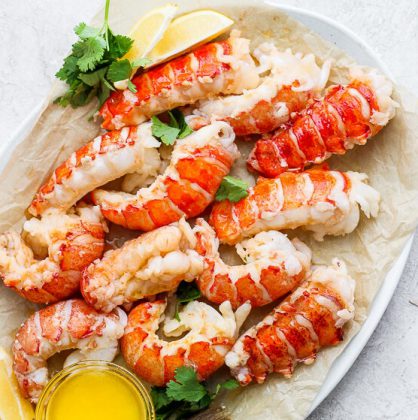
Butter Poached Lobster Tails
Ingredients
- 2 6-8 oz cold water lobster tails, thawed
- 6 tablespoons high quality unsalted butter divided
- ¼ cup water
- Kosher salt and freshly ground black pepper
- Lemon wedges for serving
- Fresh parsley chopped (optional, for garnish)
Instructions
- Prepare lobster tails: Using kitchen shears, cut through the top shell lengthwise. Pry open and lift the meat, leaving it attached at the tail. Pat meat dry and season with salt and pepper.
- Sear: In a large skillet over medium high, melt 1 tbsp butter. Sear lobster, meat side down, for 1-2 mins until golden. Flip and sear 30 secs. Remove to a plate.
- Poach: Reduce heat to low. Add remaining 5 tbsp butter and ¼ cup water to the skillet. Swirl to melt and combine.
- Return lobster to skillet (butter should be at a gentle simmer). Spoon butter over meat continuously. Poach for 5-8 mins, basting often, until meat is opaque and firm.
- Rest & Serve: Transfer lobster to a plate, tent with foil, and rest 2-3 mins. Serve immediately with lemon wedges, garnished with parsley, and pour the poaching butter over top.