







There’s a certain magic to a dish that’s better than takeout. You know the one; the kind you crave on a busy weeknight, but ordering it feels like a splurge, and you’re left wondering, “Could I make this at home?” For years, Mongolian Beef was that dish for me. I’d order it from my favorite spot, savoring the perfect balance of sweet and savory sauce clinging to impossibly tender beef. Then, one night, I decided to crack the code. After countless experiments (some more successful than others!), I landed on this recipe. It’s my homemade tribute to that irresistible takeout favorite, but made with simple ingredients and ready in about the same time it would take for delivery to arrive. It’s become our family’s most requested “fakeaway” dinner.
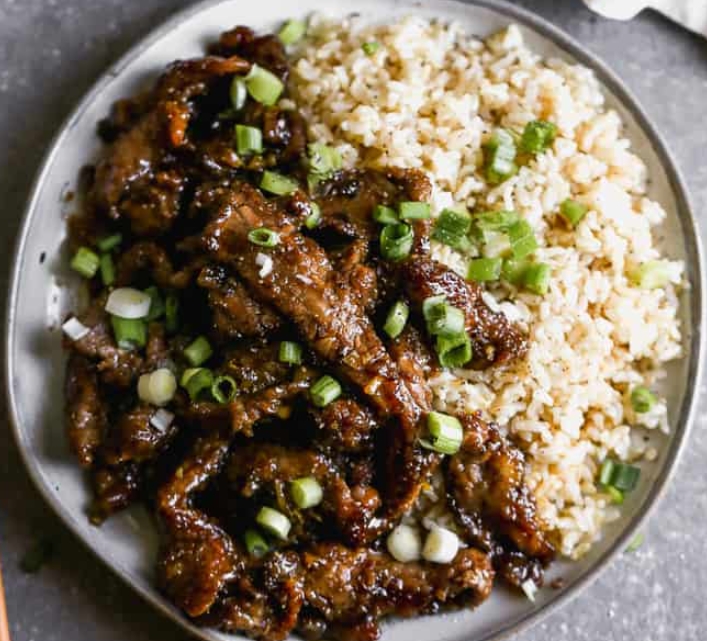
The Flavor & Texture Profile: This dish is all about harmony and contrast. The star is the succulent, melt in your mouth flank steak, coated in a light cornstarch crust that sears to a delicate crispness in the hot pan. It’s enveloped in a deeply savory, rich, and glossy sauce with a backbone of salty soy sauce, the warmth of fresh ginger and garlic, and a caramel like sweetness from brown sugar. The finishing sprinkle of fresh green onions adds a crucial bright, grassy crunch. Served over a bed of steaming white rice, every bite is a perfect mix of tender, crispy, sweet, and savory.
My Pro Tips for Perfect Mongolian Beef Every Time
This recipe is straightforward, but a few chef approved secrets will make it restaurant quality:
- The Thin Slice Secret: For the most tender beef, slice the flank steak as thinly as possible (⅛ inch is ideal) and always across the grain. This shortens the muscle fibers, guaranteeing each piece is easy to bite through and never chewy.
- The Cornstarch Coat: Don’t skip coating the beef thoroughly in cornstarch. This creates a light barrier that locks in the beef’s juices during the quick sear and helps the luxuriously thick sauce cling to every piece.
- Batch Cooking is Non Negotiable: To get that perfect sear without steaming the meat, cook the beef in a single layer in small batches. Overcrowding the pan lowers the temperature and causes the beef to stew in its own juice, losing its crisp edge. Patience here pays off in texture!
- The Garlic & Ginger Rule: Sauté the fresh ginger and garlic for only about 20 seconds; just until fragrant. Burning them will make the sauce taste bitter. They should smell incredible and release their flavor into the oil to perfume the entire dish.
Make Ahead, Storage & Freezing Instructions
- Make Ahead: This is a fantastic meal prep candidate. You can slice the beef and store it in an airtight container in the fridge for up to 24 hours. The sauce can be whisked together and kept in a jar in the fridge for up to 5 days. When ready to cook, let the sauce come to room temperature or give it a good shake before using.
- Storage: Store any leftovers in an airtight container in the refrigerator for up to 3 days. The sauce will continue to thicken as it chills.
- Reheating: Reheat gently in a skillet over medium low heat, adding a splash of water or broth to loosen the sauce. You can also microwave it in 30 second intervals, stirring in between. Avoid high heat, which can toughen the beef.
- Freezing: You can freeze the fully cooked and cooled Mongolian Beef (without rice) for up to 2 months. Thaw overnight in the refrigerator and reheat gently on the stovetop. Note that the texture of the green onions will soften after freezing.
Step by Step Instructions
Let’s walk through how this iconic dish comes together in just a few simple steps.
1Slice and Coat the Beef: Place your flank steak in the freezer for 15-20 minutes to firm it up, which makes slicing much easier. Using a very sharp knife, slice the steak into the thinnest strips possible, cutting across the grain of the meat. Lay the slices on a large plate or baking sheet and toss them thoroughly with the ⅓ cup of cornstarch until every piece is lightly coated.
2Sear the Beef (In Batches!): Heat a large, heavy bottomed skillet, wok, or Dutch oven over medium high heat. Add 1-2 tablespoons of oil and let it get hot. Working in small batches, add a single layer of cornstarch dusted beef. Let it sear undisturbed for about 30 seconds, then flip and cook for another 30 seconds until just browned. Transfer to a clean plate. Repeat with remaining beef, adding a bit more oil to the pan if needed between batches.
3Build the Signature Sauce: In a medium bowl, whisk together the low sodium soy sauce, water, and packed brown sugar until the sugar begins to dissolve. In a separate small bowl, make your cornstarch slurry by stirring the 2 teaspoons of cornstarch and 2 teaspoons of water into a smooth paste.
4Sauté Aromatics & Thicken Sauce: Reduce the heat under your pan to medium. Add the minced garlic and grated ginger. Sauté for just 20 seconds; until incredibly fragrant. Pour in the soy sauce mixture and bring it to a gentle simmer. Whisk in the cornstarch slurry and cook, stirring constantly, for 1-2 minutes until the sauce is glossy and has thickened to a syrup like consistency.
5Combine and Finish: Add the seared beef and any accumulated juices back into the pan with the sauce. Toss everything together until the beef is fully coated and heated through, about 1-2 minutes. Remove from heat and stir in the chopped green onions.
6Serve Immediately: Spoon the hot Mongolian Beef over fluffy cooked white rice. For an extra touch, garnish with an additional sprinkle of green onion or sesame seeds.
Ingredient Substitutions & Dietary Swaps
- Gluten Free: This is an easy swap! Simply use tamari or a certified gluten free soy sauce in place of regular soy sauce. Double check that your cornstarch is gluten free (it almost always is).
- Dairy Free: This recipe is naturally dairy free.
- Common Substitutes:
- Flank Steak: Skirt steak is the best alternative, sliced thinly across the grain. For a more budget friendly option, sirloin tip steak works, though it can be slightly less tender.
- Soy Sauce: Coconut aminos can be used for a slightly sweeter, less salty flavor. If using regular soy sauce instead of low sodium, reduce the amount slightly and adjust to taste at the end.
- Fresh Ginger & Garlic: In a pinch, you can use ½ teaspoon of ground ginger and 1 teaspoon of garlic powder. The flavor won’t be as bright, but it will work.
- Green Onions: Thinly sliced white or yellow onion, briefly sautéed, can be used, but you’ll miss the fresh, green finish.
Serving Suggestions & Pairings
This dish is a complete meal with rice, but you can easily build a fantastic spread around it.
- Side Dish Pairings: Steamed broccoli or snap peas tossed right into the pan at the end is a classic and easy way to add veggies. For a refreshing counterpoint, a simple Asian cucumber salad or a sesame ginger slaw works beautifully.
- Wine/Drink Pairing: A slightly sweet and off dry white wine like Riesling or Gewürztraminer pairs wonderfully by complementing the dish’s sweetness and balancing the salt. For a non alcoholic option, ginger beer, jasmine iced tea, or sparkling water with a squeeze of lime are all excellent choices.
FAQ: Your Mongolian Beef Questions, Answered
- Q: Why is my beef tough and chewy?
- A: This is almost always due to one of two things: not slicing thinly and against the grain, or overcooking the beef during searing. It cooks in just 60-90 seconds total; any longer and it will toughen.
- Q: Can I make this with chicken or tofu?
- A: Absolutely! For chicken, use thinly sliced boneless, skinless chicken breasts or thighs. For tofu, use extra firm tofu, pressed to remove water, cut into cubes, and coated in cornstarch before pan frying until crisp.
- Q: My sauce didn’t thicken. What went wrong?
- A: The cornstarch slurry needs to come to a full simmer to activate its thickening power. Make sure your sauce is bubbling gently after you add the slurry and cook it for the full 1-2 minutes while stirring.
- Q: Is this dish spicy?
- A: This base recipe is not spicy; it’s more sweet and savory. To add heat, include 1-2 teaspoons of sriracha or chili garlic paste to the sauce mixture, or garnish with crushed red pepper flakes.
Essential Equipment
- Large Skillet, Wok, or Dutch Oven: A 12 inch cast iron skillet or carbon steel wok is ideal for getting a great sear and providing enough surface area for the sauce to reduce. A heavy bottomed stainless steel skillet or Dutch oven also works perfectly.
- Very Sharp Chef’s Knife: Crucial for slicing the flank steak thinly and easily.
- Two Mixing Bowls: One for the sauce, one for the cornstarch slurry.
- Whisk: For ensuring your sauce ingredients and slurry are perfectly smooth.
- Tongs: For easily flipping the beef strips during searing.
Better Than Takeout Mongolian Beef
Ingredients
- 1 pound flank steak sliced very thinly across the grain
- ⅓ cup cornstarch
- 2-4 Tablespoons vegetable or canola oil for frying
- ½ cup low sodium soy sauce
- ¼ cup water
- ½ cup packed light brown sugar
- 2 tsp cornstarch + 2 tsp water mixed into a slurry
- 1 teaspoon freshly grated ginger
- 4 cloves garlic minced
- 1 bunch green onions chopped
- 2-3 cups hot cooked rice for serving
Instructions
- Slice the partially frozen flank steak into very thin strips (¼ inch or less), cutting across the grain. Place slices on a plate and toss thoroughly with ⅓ cup cornstarch until coated.
- Heat 1-2 tablespoons of oil in a large skillet or wok over medium high heat. Cook beef in a single layer in small batches for 30-60 seconds per side, just until browned. Remove to a plate and repeat with remaining beef.
- In a bowl, whisk together soy sauce, ¼ cup water, and brown sugar. In a small cup, mix 2 tsp cornstarch with 2 tsp water to make a smooth slurry.
- Reduce skillet heat to medium. Add ginger and garlic; sauté for 20 seconds until fragrant.
- Pour in the soy sauce mixture and bring to a simmer. Whisk in the cornstarch slurry and cook, stirring, for 1-2 minutes until sauce thickens and becomes glossy.
- Return all seared beef to the skillet. Toss to coat in the sauce and cook for 1-2 minutes until heated through. Remove from heat and stir in chopped green onions.
- Serve immediately over hot cooked rice.