





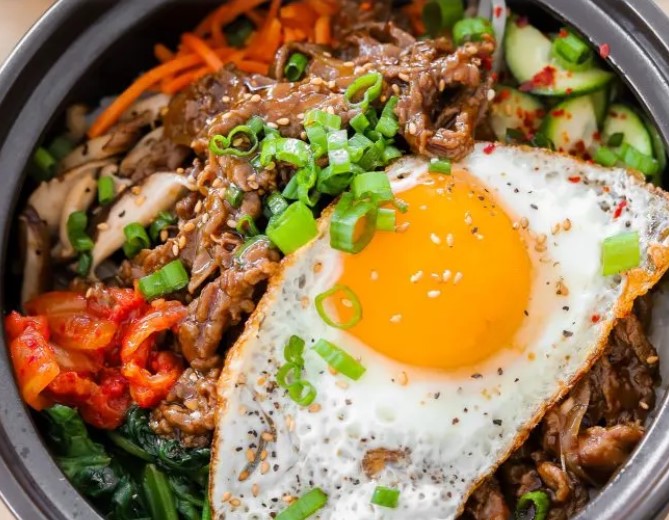
Let me tell you about the first time I truly fell in love with Bibimbap. I was at a small, bustling Korean restaurant, and a sizzling stone bowl was placed in front of me. The sound was incredible; a loud, satisfying crackle. As I stirred, I unearthed a treasure trove of tender marinated beef, an array of colorful vegetables, a perfectly fried egg with a runny yolk, and a generous swirl of bright red gochujang sauce, all mixing together over perfectly cooked rice. That first bite was a revelation: savory, sweet, spicy, and packed with so many incredible textures. I knew I had to learn to make this at home. This recipe is my homage to that unforgettable meal. It’s designed to be approachable for any home cook, breaking down each component so you can build your own beautiful, delicious, and deeply satisfying Bibimbap bowl. It’s a project of love, but every step is worth it for that final, glorious mix.
Let’s talk about the symphony of flavors and textures in this dish. It’s a perfect balance in every way. The bulgogi marinade infuses the beef with a savory sweet depth from soy sauce, brown sugar, and sesame oil, with a gentle warmth from ginger, garlic, and chili. Each vegetable is treated simply to let its own flavor shine: earthy shiitake mushrooms, sweet carrots, fresh spinach, cool and tangy quick pickled cucumbers, and mild bean sprouts. The gochujang sauce is the star that ties it all together; a creamy, spicy, slightly sweet concoction that adds a rich, complex kick. The textures are just as varied: you have tender, juicy beef, soft, wilted spinach, crunchy pickled cucumber, and the silky yolk of a fried egg that creates a luscious sauce when mixed. Every single spoonful is a new adventure.
Secrets to Bibimbap Success
These pro tips are your guarantee for a beautiful, delicious, and authentic tasting Bibimbap.
- Thinly Slice Your Beef for Tender Bulgogi: The key to perfect bulgogi is ultra thin slices of beef. This allows it to cook quickly and absorb the marinade beautifully. For easy slicing, pop the steak in the freezer for about an hour; it will firm up, making it much easier to cut into paper thin slices. Alternatively, look for pre shaved steak at the grocery store (the kind used for Philly cheesesteaks works perfectly!).
- Marinate for Maximum Flavor: While 30 minutes is the minimum, letting the beef marinate for longer (even a few hours or overnight) will result in even more flavorful, tender meat. The sugar and acids in the marinade help to break down the muscle fibers.
- Prep Your Veggies First: There are several vegetable components to this dish. To make the final assembly a breeze, cook all your vegetables first and set them aside in separate piles. This way, when it’s time to build your bowl, everything is ready to go.
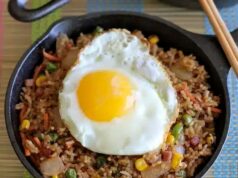
- The Egg is Essential: Don’t skip the fried egg! The runny yolk is not just a garnish; it’s a crucial part of the dish. When you mix everything together, the yolk creates a rich, velvety sauce that coats the rice and vegetables, tying all the flavors together beautifully.
Make Ahead, Storage & Freezing Instructions
While Bibimbap is best enjoyed fresh, here’s how to plan ahead.
- Make Ahead Components: You can prep almost everything in advance!
-
- Bulgogi: Marinate the beef up to 24 hours ahead and store it in the fridge.
- Vegetables: Cook all the vegetables (mushrooms, carrots, spinach, cucumbers, bean sprouts) up to 2 days ahead and store them separately in airtight containers in the refrigerator.
- Gochujang Sauce: Make the sauce up to 1 week ahead and store it in a jar in the fridge.
- Rice: Cook a batch of rice 1-2 days ahead and store it covered in the fridge. Reheat gently before serving.
- Storing Leftovers: Store leftover components separately. The assembled bowl does not store well once mixed. Keep leftover bulgogi, each vegetable, sauce, and rice in separate airtight containers in the refrigerator for up to 3 days.
- Reheating: Reheat the bulgogi and any vegetables gently in a skillet or microwave. Serve with freshly cooked or reheated rice and a fresh fried egg.
- Freezing Instructions: I do not recommend freezing this dish. The texture of the vegetables and the cooked beef will not hold up well upon thawing.
Step by Step Instructions
Prep Time: 1 hour (includes marinating) | Cook Time: 30 minutes | Total Time: 1 hour 30 minutes
Follow these steps to build your own beautiful Bibimbap bowl. It’s a process, but each step is simple and rewarding.
Part 1: Make the Bulgogi
1Make Marinade: In a medium bowl, whisk together the soy sauce, brown sugar, sesame oil, minced garlic, ginger paste, chili powder, red pepper flakes, black pepper, olive oil, and rice vinegar.
2Marinate Beef: Add the thinly sliced steak and sliced yellow onion to the bowl. Mix well until everything is evenly coated. Cover and refrigerate for at least 30 minutes, or up to 24 hours for more flavor.
3Cook Bulgogi: When ready to cook, heat a large skillet or wok over high heat. Add the marinated beef and onions (discarding any excess marinade) and cook, stirring frequently, for 3-5 minutes, until the beef is fully cooked and slightly caramelized. Transfer to a plate and set aside.
Part 2: Cook the Vegetables
1Mushrooms: In a small skillet over medium heat, melt the butter. Add the chopped shiitake mushrooms, season with a pinch of salt and pepper, and sauté for 3-5 minutes until tender. Set aside.
2Carrots: In the same skillet, add the shredded carrots, 1 tablespoon of water, and 1 teaspoon of sesame oil. Season with a pinch of salt. Sauté over medium heat for 2-3 minutes until the carrots are slightly softened. Set aside.
3Spinach: Wipe the skillet clean. Add a tiny drizzle of oil and the fresh spinach. Sprinkle with a pinch of salt. Cover and cook over low heat for 2-3 minutes, just until the spinach is wilted. Remove from heat and set aside.
4Quick Pickled Cucumbers: In a small bowl, combine the diced cucumbers, chili paste, sugar, rice vinegar, hot water, and a pinch of salt. Stir well and let it sit for at least 10-15 minutes to quickly pickle.
5Bean Sprouts: Place the bean sprouts in a heat safe bowl. Pour enough boiling water over them to cover. Let them sit for 2-3 minutes, then drain well.
Part 3: Make the Gochujang Sauce
1In a small bowl, combine the gochujang paste, soy sauce, sesame oil, white sugar, water, Kewpie mayo, and rice vinegar. Whisk together until the sauce is completely smooth and creamy. Taste and adjust ingredients to your preference (more sugar for sweetness, more gochujang for heat).
Part 4: Assemble Your Bibimbap
1Prepare the Rice and Egg: Have your cooked jasmine rice ready and warm. Fry an egg to your liking (sunny side up is traditional for that runny yolk).
2Build the Bowl: Place a generous serving of warm jasmine rice in a large bowl. Artfully arrange the cooked bulgogi, shiitake mushrooms, carrots, spinach, pickled cucumbers, and blanched bean sprouts on top of the rice in separate sections.
3Add Sauce and Garnish: Drizzle a generous amount of the gochujang sauce over everything. Top with the fried egg and a sprinkle of chopped green onions.
4Mix and Enjoy! The most important step: before you take a bite, mix everything together thoroughly. This ensures every spoonful has a little bit of everything; the meat, the veggies, the rice, the egg yolk, and that incredible sauce. Dig in!
Customize It: Ingredient Substitutions
This recipe is wonderfully adaptable to different tastes and dietary needs.
- Gluten Free: To make this dish gluten free, use tamari or coconut aminos in place of the low sodium soy sauce in both the bulgogi marinade and the gochujang sauce. Double check that your gochujang paste is also gluten free (some brands contain wheat).
- Vegetarian/Vegan: For a vegetarian version, simply omit the bulgogi and add more vegetables or a protein like marinated and pan fried tofu (use the same bulgogi marinade!). For a vegan version, also omit the egg and use a vegan mayo in the gochujang sauce.
- Protein Swaps: Not a fan of beef? This is delicious with thinly sliced chicken breast or thigh, marinated and cooked the same way. You could also use pork.
- Common Pantry Swaps:
-
- Mushrooms: No shiitake? Use cremini, baby bella, or even white button mushrooms.
- Vegetables: Feel free to use what you have! Zucchini, bell peppers, or kale can be sautéed and added. The key is variety.
- Gochujang Paste: If you can’t find gochujang, you can try a mix of miso paste with a little gochugaru (Korean chili flakes) or sriracha for a similar flavor profile, though it won’t be quite the same.
- Kewpie Mayo: This Japanese mayo is richer and creamier than American mayo. If you don’t have it, you can use regular mayo, but Kewpie is highly recommended for its flavor.
Serving Suggestions: How to Enjoy Your Bibimbap Feast
This dish is a complete meal in a bowl, but here’s how to make it a true experience.
- The Classic Pairing: Serve your Bibimbap with a side of kimchi and a simple soup like miso soup or a light seaweed soup (miyeokguk).
- Make it a Feast: If you’re serving a crowd, set up a “Bibimbap bar” with all the components in separate bowls. Let everyone build their own bowl exactly how they like it.
- For the Adventurous (Dolsot Bibimbap): For a truly special experience, try making Dolsot Bibimbap in a hot stone bowl. If you have a stone bowl, heat it in the oven at 400°F for 30 minutes. Carefully remove it (it’s extremely hot!), coat the bottom with sesame oil, add the hot rice, and then arrange your toppings. The rice will sizzle and form a delicious crispy crust on the bottom. So good!
- Beverage Pairings: The bold, spicy, savory flavors are a perfect match for a crisp, light lager like Hite or Cass. A dry Riesling or a fruity soju cocktail would also be wonderful. For a non alcoholic option, iced barley tea (boricha) is classic and refreshing.
Essential Equipment List
- Large Skillet or Wok: For cooking the bulgogi.
- Small Skillet or Pan: For cooking the individual vegetables and the fried egg.
- Small Bowls (several): For the marinade, the gochujang sauce, and for holding prepped vegetables.
- Chef’s Knife and Cutting Board: For slicing the beef and prepping the vegetables.
- Box Grater or Julienne Peeler: For easily shredding the carrots.
- Large Serving Bowls: For assembling and serving the Bibimbap.
Frequently Asked Questions (FAQ)
- What is Bibimbap?
Bibimbap (literally “mixed rice”) is a famous Korean dish consisting of a bowl of warm rice topped with various seasoned vegetables (called namul), a protein (often beef), a fried egg, and gochujang (chili pepper paste). It’s all mixed together just before eating. - Can I use a different type of rice?
Jasmine rice is wonderful, but short grain white rice is the most traditional and has a slightly sticky texture that’s perfect for Bibimbap. Brown rice would also work for a healthier twist. - Is this recipe very spicy?
The spice level is adjustable! The recipe uses gochujang (which has a moderate heat) and optional red pepper flakes in the bulgogi. You can use mild gochujang and reduce or omit the red pepper flakes for a milder dish. You can also serve the gochujang sauce on the side so everyone can add as much or as little as they like. - I have a lot of leftover components. How should I store them?
Store each cooked component (bulgogi, each vegetable, sauce, and rice) in its own separate airtight container in the refrigerator. This way, you can reheat and reassemble fresh bowls throughout the week. The pickled cucumbers are best within a day or two.
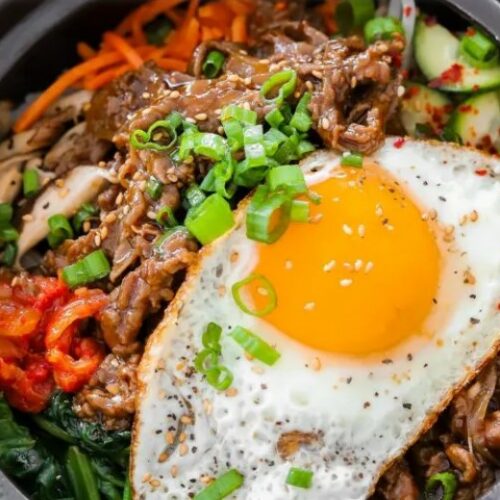
Bibimbap (Korean Mixed Rice Bowl)
Ingredients
For the Bulgogi:
- 1 pound ribeye or sirloin steak thinly sliced
- 1/2 yellow onion thinly sliced
- 4 tablespoons low sodium soy sauce
- 2 tablespoons brown sugar
- 1 ½ tablespoons sesame oil
- 1 tablespoon minced garlic
- ½ tablespoon ginger paste
- 2 teaspoons chili powder
- ½ to 1 teaspoon red pepper flakes
- ½ teaspoon black pepper
- 1 tablespoon olive oil
- 1 tablespoon rice vinegar
For the Vegetables:
- 1 cup shiitake mushrooms chopped
- 1 tablespoon unsalted butter
- Salt and black pepper to taste
- 1 cup carrots julienned or shredded
- 1 tablespoon water
- 1 teaspoon sesame oil
- 3 cups fresh spinach
- Salt to taste
- 2 small cucumbers diced
- 1 tablespoon chili paste gochujang or sambal oelek
- ½ tablespoon sugar
- ¼ cup rice vinegar
- ½ cup hot water
- Salt to taste
- 1 cup bean sprouts
- Boiling water for blanching
For the Gochujang Sauce:
- ½ cup gochujang paste mild or hot
- 1 tablespoon low sodium soy sauce
- ½ tablespoon sesame oil
- 1 ½ to 2 tablespoons white sugar
- ¼ cup water
- ¼ cup Kewpie mayo
- 2 tablespoons rice vinegar
For Assembly:
- Cooked jasmine rice for serving
- Green onions chopped, for garnish
- Fried eggs for serving
Instructions
- Make Bulgogi Marinade: In a bowl, whisk together soy sauce, brown sugar, sesame oil, garlic, ginger paste, chili powder, red pepper flakes, black pepper, olive oil, and rice vinegar.
- Marinate Beef: Add sliced steak and onion to the marinade. Mix well, cover, and refrigerate for at least 30 minutes (up to 24 hours).
- Cook Vegetables (prepare each separately and set aside):● Mushrooms: Sauté in butter with salt and pepper until tender.● Carrots: Sauté with water, 1 tsp sesame oil, and a pinch of salt until slightly softened.● Spinach: Wilt in a covered pan with a drizzle of oil and a pinch of salt over low heat.● Cucumbers: Combine with chili paste, sugar, rice vinegar, hot water, and salt. Let sit for 10-15 minutes to quick-pickle.● Bean Sprouts: Place in a bowl, cover with boiling water, let sit for 2-3 minutes, then drain.
- Make Gochujang Sauce: In a small bowl, whisk together gochujang paste, soy sauce, sesame oil, sugar, water, Kewpie mayo, and rice vinegar until smooth. Adjust to taste.
- Cook Bulgogi: Heat a large skillet over high heat. Add marinated beef and cook, stirring frequently, for 3-5 minutes until cooked through and caramelized.
- Assemble Bowls: Place a serving of warm jasmine rice in each bowl. Arrange bulgogi and prepared vegetables in sections on top of the rice. Drizzle with gochujang sauce.
- Garnish and Serve: Top each bowl with a fried egg and a sprinkle of chopped green onions. Serve immediately, instructing everyone to mix everything together thoroughly before eating.
Notes
- Thinly Slicing Beef: For easier slicing, place steak in the freezer for 1 hour. Look for pre shaved steak at the store as a shortcut.
- Make Ahead: All components except the egg and rice can be prepared 1-2 days ahead and stored separately in the fridge.
- Vegetarian/Vegan: Omit beef and use marinated tofu. Omit egg and use vegan mayo in the sauce.
- Gluten Free: Use tamari or coconut aminos in place of soy sauce. Check gochujang label.